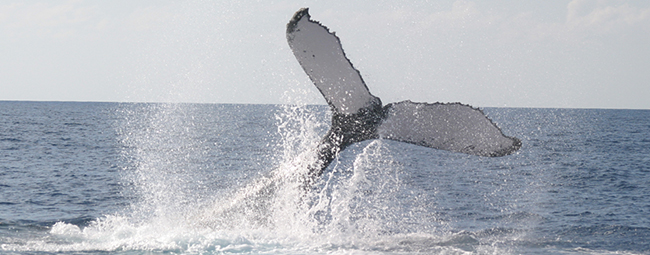
One of the real pleasures of sailing the world’s oceans is the chance encounters with the amazing creatures that populate the seas. I’ve seen dolphin everywhere we’ve sailed, and whales of all types including orcas, sperm whales, humpbacks and pilot whales. I’ve seen sharks of all types including whale sharks, black tips, white tips, hammerheads, tigers, threshers and more. Above the water I’ve seen a host of aerial specialists including shearwaters, frigates, gulls of all types, terns, boobies, cormorants, shore birds and even a few great albatross. These encounters are always special, yet I’ve never done anything useful with the observations and data that they gave me. But there are ways to take the sailing and cruising life and use it to contribute to our scientific knowledge of the seas and the creatures in and over it. NOAA, which maintains and manages National Marine Sanctuaries all around the country and in the Caribbean and South Pacific, has a Citizen Science program that uses volunteers like us to collect data and samples for further study. You don’t have to be a scientist, you just have to be observant and keep track of what you find. One of my personal favorite Citizen Science programs is called Carib Tails. Sailors like us seek out humpback whales in their winter breeding grounds in the Caribbean and take photos of the whales’ tails with a time and specific location recorded. A humpback’s tail is like its fingerprint and is an easy way to identify individuals. Since many of the humpbacks that breed in the Caribbean migrate north to New England and the Canadian Maritimes in the summer, Carib Tails also works with The Stellwagen Bank Sanctuary and other NOAA Sister Sanctuaries to collect, collate and study sightings and new photos of the whales’ tails. So, if you are out there seeking the amazing experience of encountering whales and other oceanic creatures, why not shoot some video or take some pictures of them and their tails and share them with the NOAA scientists? Next time I’m out there, I certainly will.
For more information on the NOAA Citizen Scientist program click here
For more information on Carib Tails click here