
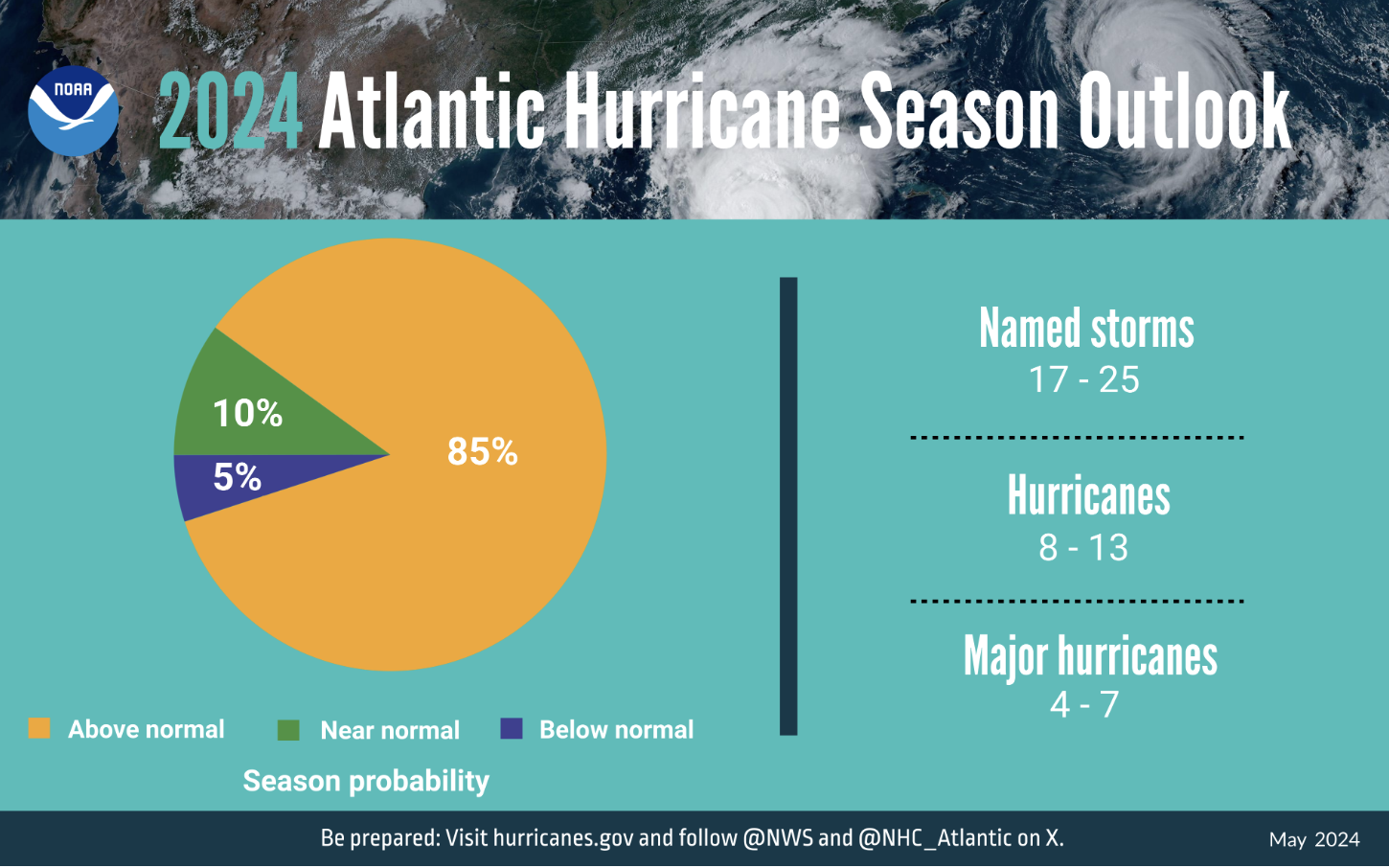
In fact, for 2024 the agency is predicting as many 25 named storms, 13 hurricanes and up to seven major hurricanes of Category 3 or higher. The last time a season looked anything like this was 2005 when the U.S. was hit by Katrina and seven other hurricanes.
There are many factors that underpin NOAA’s forecast but three stand out as anomalies that are significant contributors to hurricane formation.
First, ocean temperatures are the highest ever recorded and warm water and the evaporation that comes from it are the fuel that turns tropical low pressure systems into revolving storms that in turn become hurricanes.
Second, as we have been posting this spring, the El Nino of recent years is one of the strongest ever recorded. As it fades, the ensuing La Nina is forming and also will be one of the strongest in history. El Ninos create wind sheer above the tropical Atlantic which tends to decapitate building tropical storms which prevents them from growing into hurricanes. La Ninas have the opposite effect and will in fact induce tropical systems to grow and thrive. That means large storms.
Third, in the Atlantic, low-pressure waves flowing off the west coast of Africa are forecast to be more numerous than usual. These waves are the seeds that turn into tropical waves near the Cape Verde Islands and then flow west with the trade winds.
As these waves flow west, they will encounter the extra warm Atlantic waters and will be free to grow under the La Nina weather patterns.
NOAA’s conclusion for 2024, as we said at the top, is more tropical storms, more hurricanes and more major hurricanes. All of us in North America and particularly on the southeast and southwest coasts have to plan accordingly. Read more here.