
PredictWind is the leading weather forecasting and routing software in the recreational boating market and is particularly favored by offshore sailors –racers and cruisers—for its wide range of weather models and its accuracy. The New Zealand-based company recently announced that it had incorporated three new artificial intelligence-driven models to make use of this ever-changing, data-crunching terrain.
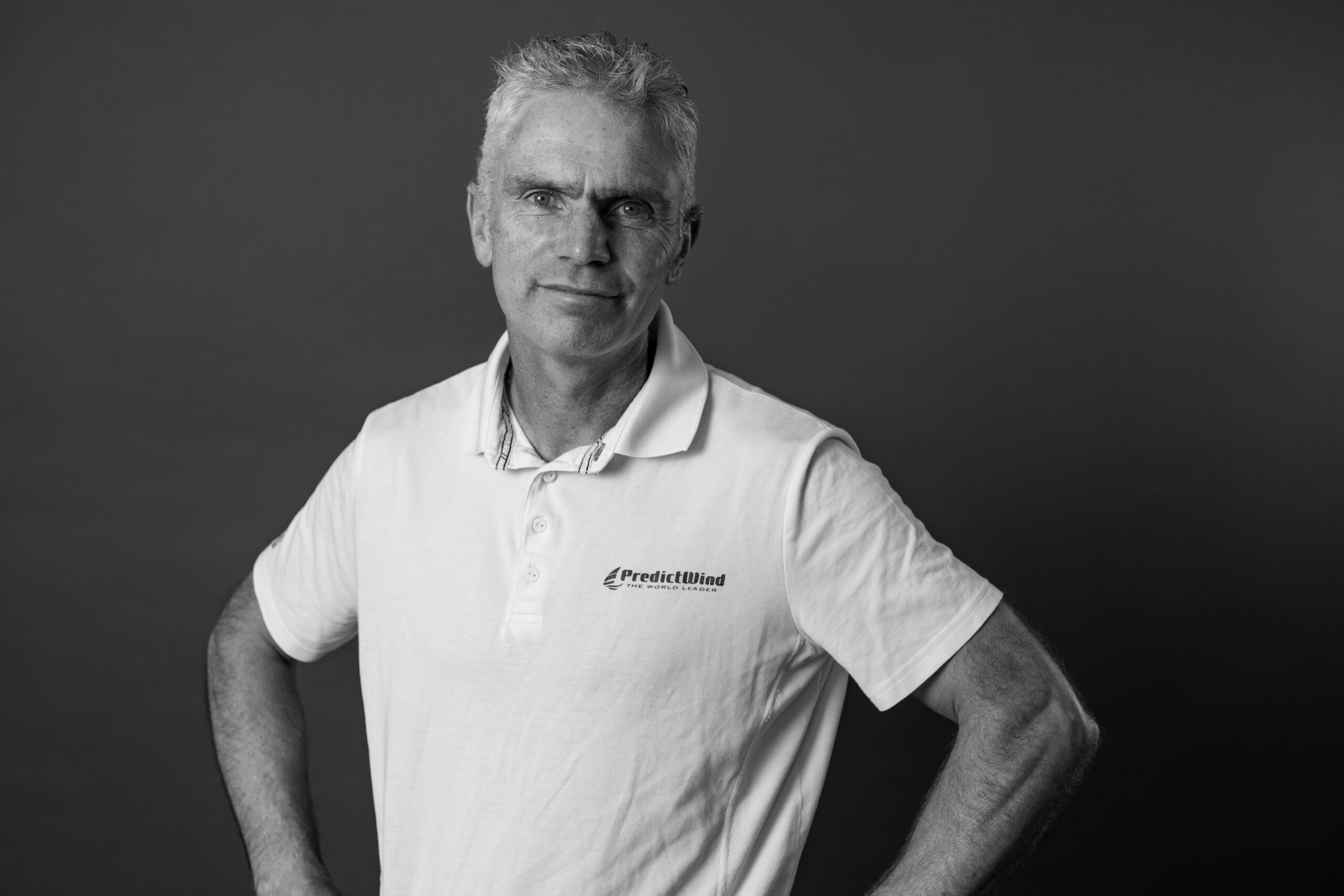
I’ve used PredictWind on several ocean passages and have found it to be remarkably useful for weather forecasting and routing and I can vouch that twice it has saved us from facing storm conditions. On Wednesday, I had a chance to speak with PredictWind’s founder and CEO Jon Bilger to catch up on how AI is changing the world of weather forecasting.
“Since founding the company,” Bilger said, “we have always focused on sourcing the very best data available and this is something we are dedicated to every day.”
Incorporating AI into their suite of models only makes sense since the technology can analyze vast amounts of data from several models including the ECMWF (hi-res), AIFS, Fengwu, and GraphCast to generate a single, optimized forecast covering the globe.”
The company’s new PWAI is PredictWind’s proprietary AI-powered model that was developed in-house by an AI expert. In Beta mode, it is proving to be more than a match for all of the existing weather models from the US, Europe, China and now Germany, which was added to the PW menu this year.
“AI models don’t use conventional forecasting tools” Bilger explained. “Instead, it uses pattern-matching formulas that absorb all of the world’s models every six hours and create one huge weather picture for the whole planet.”
Unlike models like the GFS from the US or the European model, which give forecasts for 10 and five-kilometer squares, AI produces pictures for 25 kilometer squares. It delivers the “big picture” synoptic forecasts and is now doing so with better accuracy than the traditional models. And, it’s getting better every day as it learns how to close the gap between a forecast and actual weather.
One of PredictWinds’ popular products is a data hub that has a GPS and the ability to communicate with satellites. With an NMEA 2000 compatibility, the hub can provide accurate AIS tracking around the globe that can include a boat’s position, speed and wind direction.
Incorporated in the hub’s functions is the ability to load a boat’s polars –performance prediction curves—so you can accurately predict where you will be at a certain time in various wind speeds.
“The trouble with polars, ”Bilger said, “is that they are basically created for flat water and as everyone knows, your boat speed changes dramatically in rough conditions. So, our new AI capabilities have made possible polars that are five dimensional, incorporating wind, wave height, swell periods and size and boat speed for all conditions. The new polars learn how you sail your boat and apply all of this information for vastly improved accuracy.”
While this is important for racers, it is also important for any boat sailing offshore because the forecasts and routing PredictWind provides are based on the software knowing where you are going to be along your route at any given time.”
Another benefit of using AI in the new models is the ability to collect all of the GMDSS text alerts and forecasts worldwide, combine them all and turn them into alerts on your routing maps. If there are thunder storms ahead that may not yet appear in a forecast, these alerts will pop up with a warning. In the tropics, this could be a life saver.
A new alert function that has been built into the AI system is an Orca incidence warning. PW collects Orca attack information and translates it into icons that pop up on your screen
“We have always been a weather forecasting and routing company for sailors and power boaters,” Bilger concluded, “but with the added services, better performing polars and the alert functions, we have become a safety company, too.”