


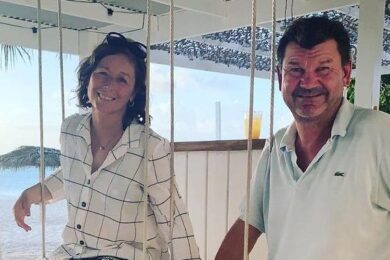
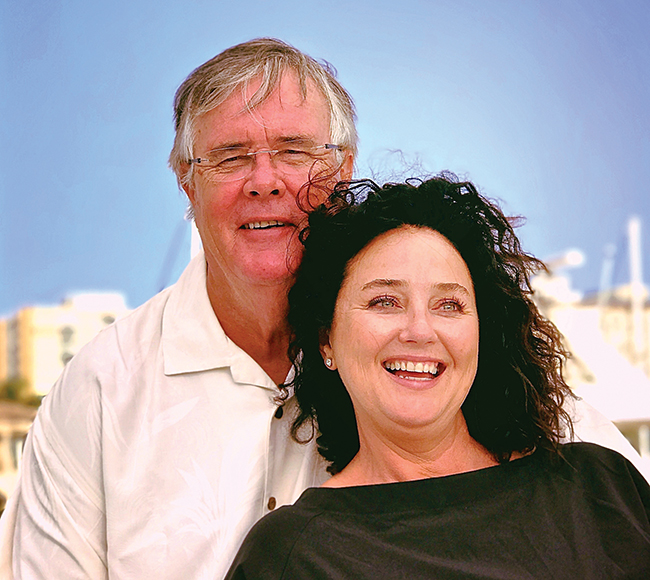

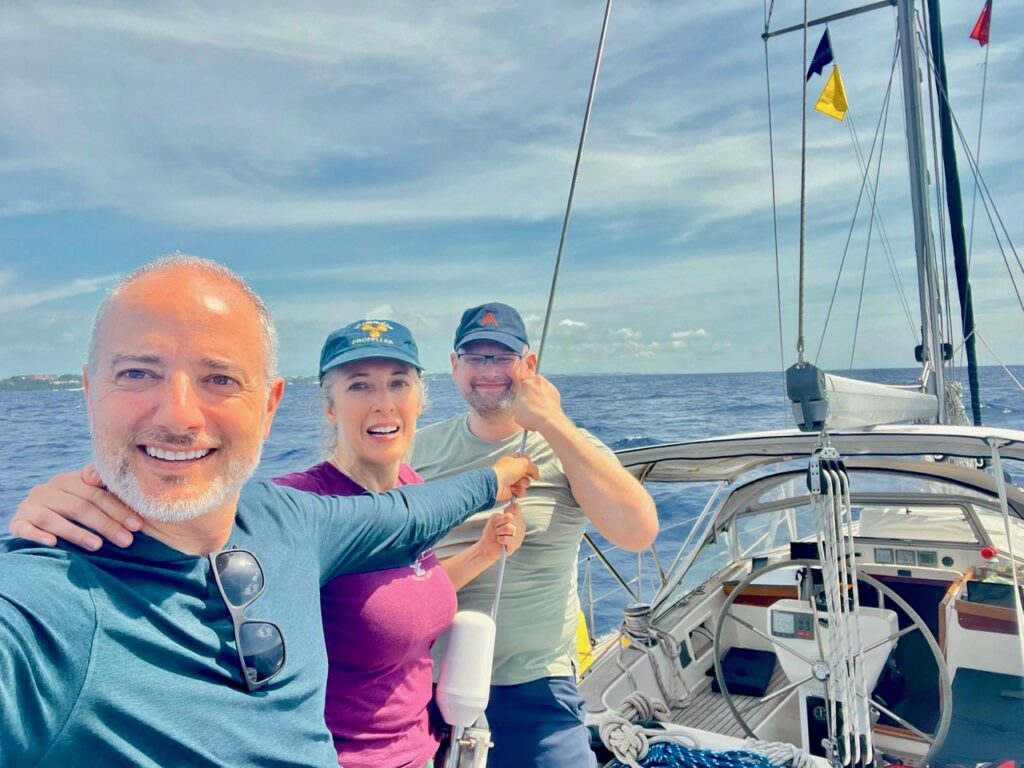
By Gottlieb and Jeanie Duwan
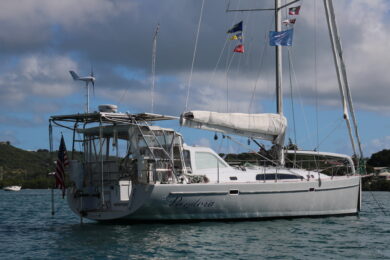
The spirit of adventure, curiosity, and search for human connections we share with our readers led us to careers in foreign affairs two decades ago. Last year, it inspired us to sail across the North Atlantic Ocean aboard our sloop Windrush to our new jobs in Rome.
Along the way, we found our careers had the flexibility to embrace even such a substantial personal endeavor. Our journey in turn enriched our work life with new perspectives on professional challenges we all face, like overcoming setbacks, adapting to change and uncertainty, and forming and leading cohesive teams.
During two months confined to a 37-foot vessel at sea, we saw firsthand how trust and teamwork, inspired by a shared vision, can overcome daunting challenges. And we gained a raw appreciation for the beauty and fragility of our planet and its scale when traversed at a human pace — both impossibly vast and surprisingly small.
May 31. It’s 2 a.m. and I’m on watch in the middle of the North Atlantic. It’s a beautiful, calm night and we are making way at about eight knots in 15-20 knots of breeze from our port quarter. Yesterday we made tacos to celebrate “half way day” on the 2,000 mile stretch between Bermuda and the Azores — hard to believe!
Our team works beautifully together, and I think about how unlikely it is for us all to find ourselves here, setting aside other priorities to realize the dream of crossing an ocean together under sail.
There is meaning to be found out here: In the beauty of the wind and waves, the sun, moon, and stars. In narrowing our focus on the passage, stripping away all other distractions. In the symphony of effort — mental and physical — required to make it happen: passage planning, weather routing, sail management, watch keeping, the galley, scientific observations.
The shared experience of facing the elements in a place where we must rely entirely on ourselves, each other, and our small vessel is rare in modern life but makes us feel alive and deeply connected with each other and nature.
It all started over drinks near our home in Annapolis as we pondered whether we could balance such an audacious adventure with work or should put the dream off. We figured we would sail our own version of the figurative seven seas, from the Chesapeake Bay to the Sargasso Sea across the North Atlantic Ocean and into the Strait of Gibraltar, then through the Alboran, Balearic, and Tyrrhenian seas all the way to Rome. It seemed exciting but more than a little crazy. Could we find the time? Who would want to join to make it happen? If we tried, would we fail?
The answer to the first question came easily. Yes, a fortuitous gap between our work assignments would allow just enough time in the right season, if all went well. We applied to join with 31 other vessels in the Atlantic Rally for Cruisers or ARC, also seeking to make the passage from North America or the Caribbean to Europe. Though we had less experience than many, and one of the smallest boats, we were accepted. With that seal of approval, the fire was lit.
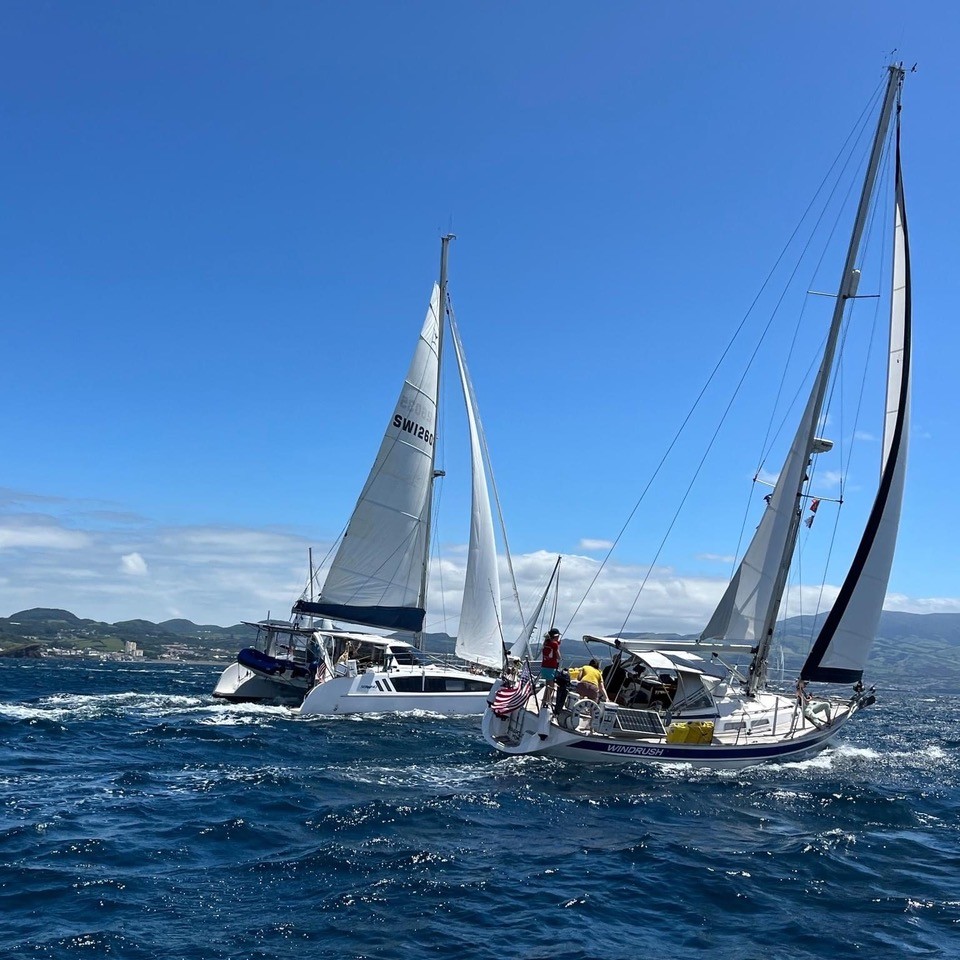
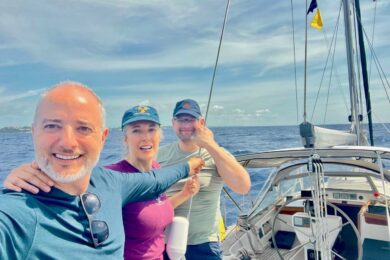
A small band of friends with brave souls who found time in their busy lives to join in the adventure answered the second question as we embarked on the intensive preparation needed to get the team and boat ready. An aikido instructor. A West Pointer, former paratrooper in the 82nd Airborne Division, and executive coach. A pilot and writer. Our 15 year old daughter Elinor. A librarian of Congress. An accomplished couple of free spirits we met at the bakery in Eastport. These amazing people, as well as their loved ones and friends, became our team — and over the next year and a half, we worked to get each other and the boat ready for the challenge. We sailed together and held countless planning sessions in the living room of our cozy colonial home, a 1700s “time ship” that made us feel connected to the sailing history of this special place. We replaced the standing rigging on our 20 year old Swedish boat, repaired the rudder, replaced electronics, added solar charging, and made countless other repairs and safety upgrades.
We volunteered for several scientific organizations to collect environmental data along the way, a unique educational opportunity for our daughter, who took on many of the measurements and observations. As citizen scientists, we got to contribute to a global bathymetry survey, measure phytoplankton density as a proxy for the ocean’s oxygen production, and sample seawater for properties like PH, specific gravity, salinity, and dissolved solids for scientists seeking data from the remote areas of the ocean we were traversing, as our route would take us far from the shipping lanes. We worked with the SeaLabs Project, SeaKeepers, and the Secchi Disk Foundation.
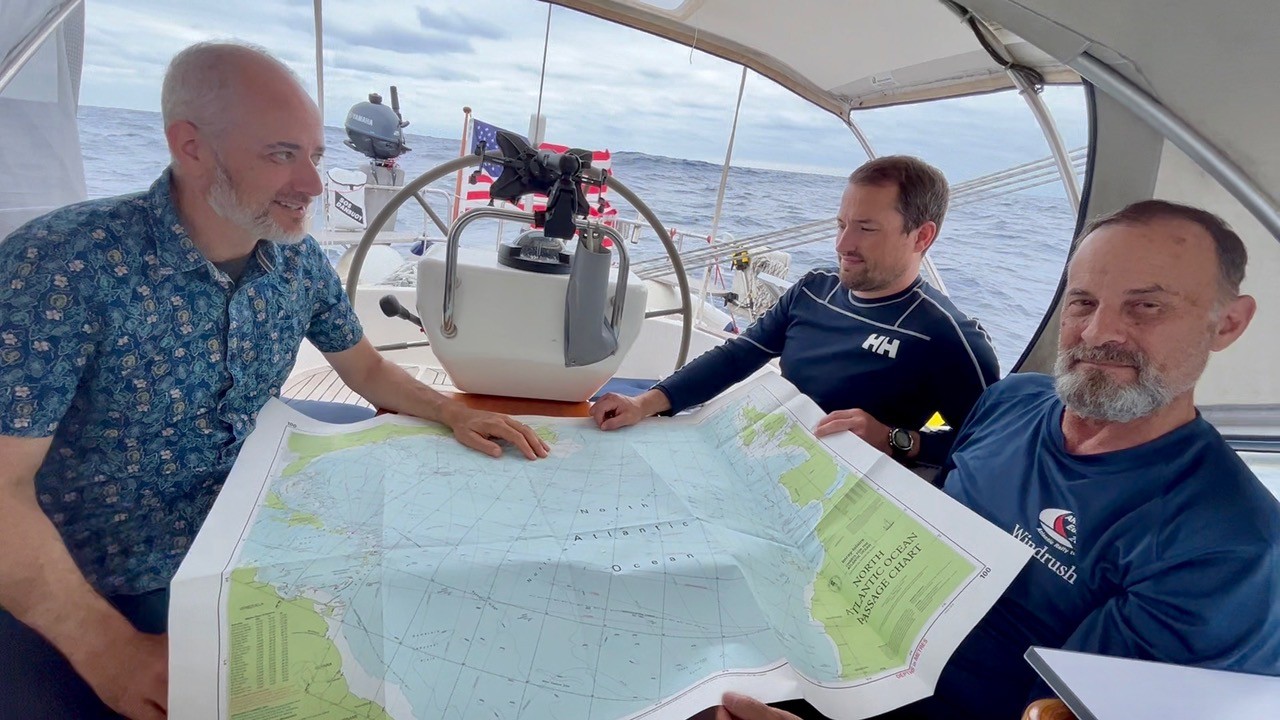
Failure was a possibility, but not a real option. We had a date by which we had to be in place to start our new jobs. We had crewmates who depended on us. To succeed we had to manage, not eschew risk and embrace problem solving and team reliance, often adapting to circumstances over which we had no control — skills we also depend on at work.
One such test came after we crossed the infamous Gulf Stream on our way to Bermuda. We still had vivid memories of hand steering through a 50 knot gale with 20 foot breaking waves two years earlier on a race to Bermuda and didn’t want to take any chances. Now our weather router warned that a low pressure system was shifting into our path and would leave the team “broken” if we pushed on.
We turned back to wait out the heaviest conditions in Cape Hatteras—of all places—then made the crossing with only one 40 knot gale to test the three-person team on this leg. Trust and teamwork are everything as you alternate watches and keep up with boat work. No matter the conditions, everyone on such a small team is essential to keep watches, cook, and manage sail changes, 24 hours a day. That includes letting go during your off-watch, whether you’re captain or crew, taking rest and trusting your mates to handle the boat, even in a storm — akin to the essential skill of delegating in an office environment.
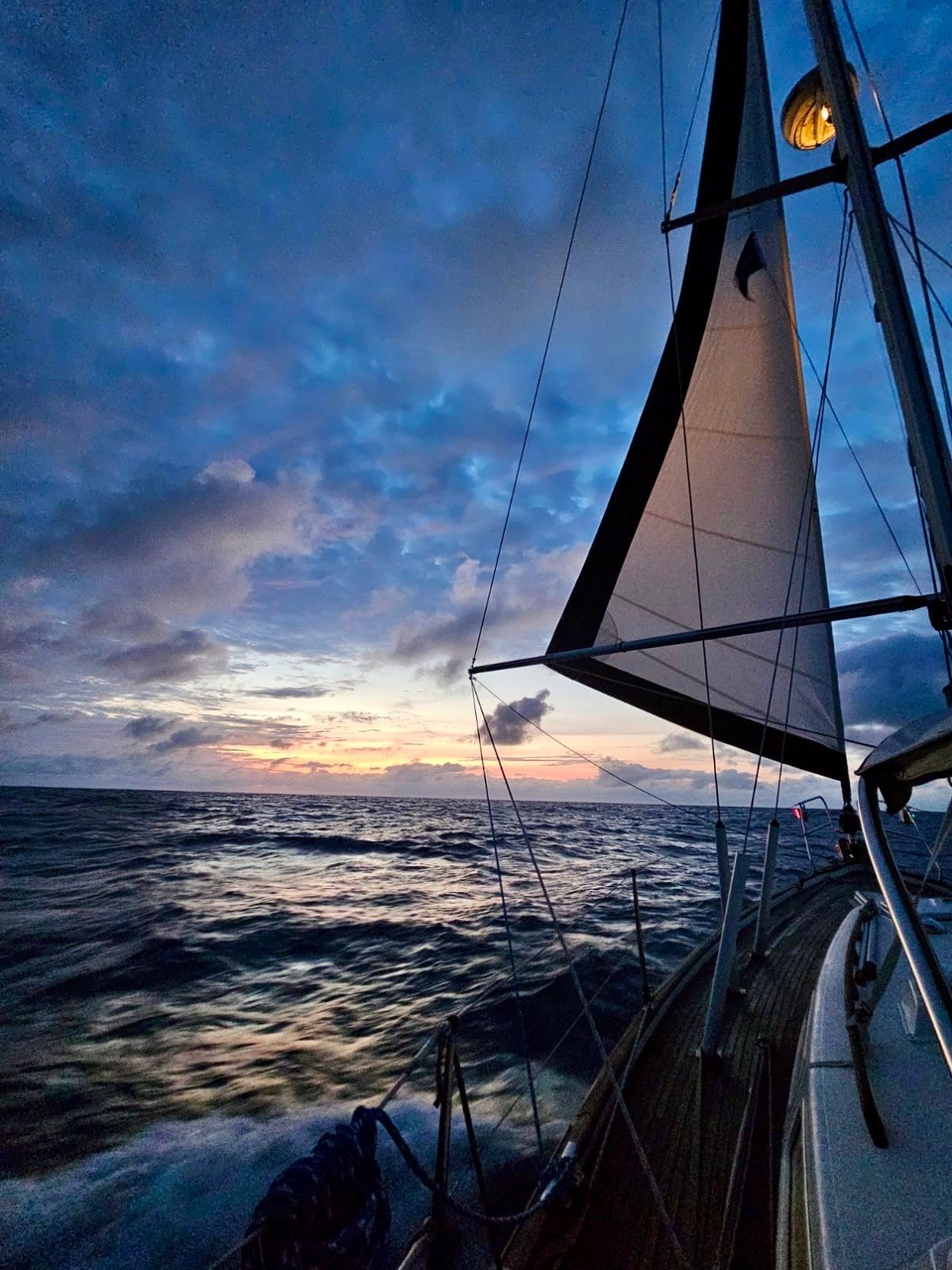
Sleeping is its own challenge when conditions are rough, but sheer exhaustion helps to get shuteye through the sound of waves pounding the hull and the wind screaming through the rigging. Once, while attempting to sleep as the boat heeled dramatically, one crew member invented “star fishing,” a technique in which the would-be sleeper spreads out all limbs like a starfish to avoid being thrown from the bunk. She nevertheless dreamt of falling off a cliff to wake up being thrown from her bunk as the boat heeled.
Our brief stop in St. George’s Harbor was wonderful but busy with re-provisioning with food to last at least a month and switching crew. In a normal year, our May-June crossing would have been eased by favorable westerly winds north of the Azores high pressure system, but in 2024, that feature did not fully set in until July, leaving the North Atlantic open to a succession of gales marching from Florida to the Arctic. This meant a squally, mostly upwind passage of 17 days, with difficult tradeoffs between speed under sail or engine while conserving limited fuel and timing landfalls for crew flight schedules.
After a becalmed start, instead of continuing on a straightforward eastward course on the great circle route, we sailed north to northwest hard on a gathering wind for three days to within a degree of the iceberg limit. There we reached an east-setting current and could work with — rather than try to prevail against — the elements. Far from the shipping lanes, we went an entire week without seeing another vessel. All our hard decisions were discussed and made as a team, which meant everyone shared equally in the risks, tradeoffs, and rewards.
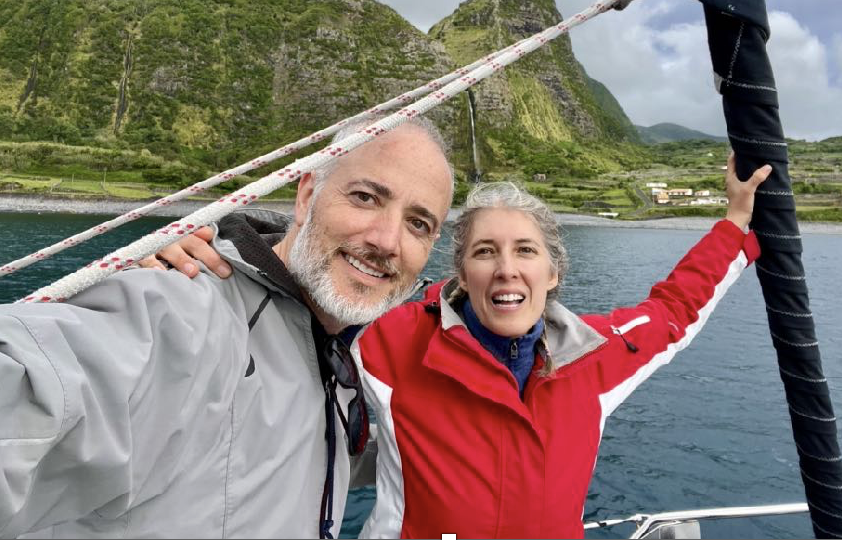
Our arrival in the Azores after a final hard day tacking into 30 knot headwinds was a storybook landfall in what felt like paradise, our sensesheightened after the deprivations of a long passage. We and our crew mates will never forget the first smell of land followed by the dramatic sight of our anchorage in Flores, with waterfalls plunging from verdant cliffs to a black sand beach as the sun set over the ocean we had just crossed.
Our crossing to mainland Portugal brought one more gale as we raced ahead of heavy weather to make the passage in five days. The sun cast a last warm glow on the dramatic cliffs of Cabo de São Vicente, making our arrival unforgettable, as was our time with friends in Lagos after finally putting the Atlantic swell behind us for good.
Next, we faced the slow and arduous task of navigating in shallow water of 20 meters or less along the entire Iberian coast to Gibraltar, a tactic designed to avoid orcas which have taken up a habit of damaging and sinking sailboats in that region. Our stops in Portugal, Spain, and through the Balearics and Corsica were hurried and complicated by mechanical problems like a broken injector pump and leaking propeller shaft that challenged our ingenuity, patience, and problem solving in unfamiliar ports, but every experience was rich with history and culture.
We learned about the Phoenician origins of Cadiz, the incredible story and geography of Gibraltar — even witnessing a live maritime dispute between Spain and the UK on the radio — took in the underwater archaeology of Cartagena and the incredible fortress harbor and soulful music of Bonifacio. On day sixty of our journey and after more than five thousand nautical miles across the Atlantic and Mediterranean, we completed our quest to sail from Annapolis to Rome.
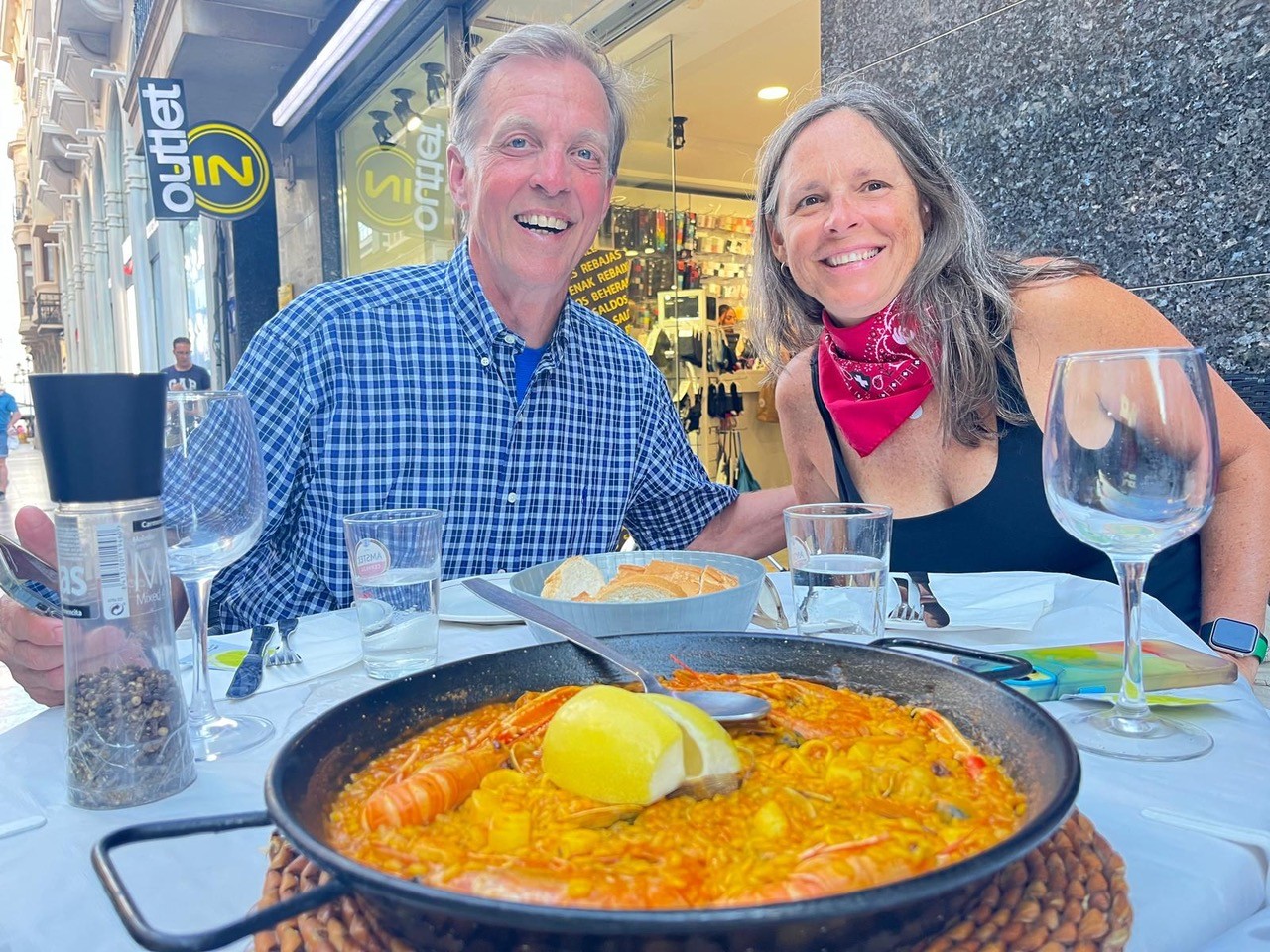
Whether to head off burnout or simply fulfill a lust for adventure, or to connect more deeply with friends or seek out new ways to experience nature or other cultures, taking time away from work to do something big may seem risky or daunting. Adventure means you cannot be certain how it will turn out, but chances are you will find the experience rewarding far beyond the “time out” from the office and gain new perspectives to enrich both your personal and work life.
Our adventure was only possible thanks to the incredible help of friends and family who joined the voyage and supported it from shore, our small but sturdy vessel, and acts of kindness from strangers in harbors along the way. We were also buoyed by the encouragement of those who followed our journey online.
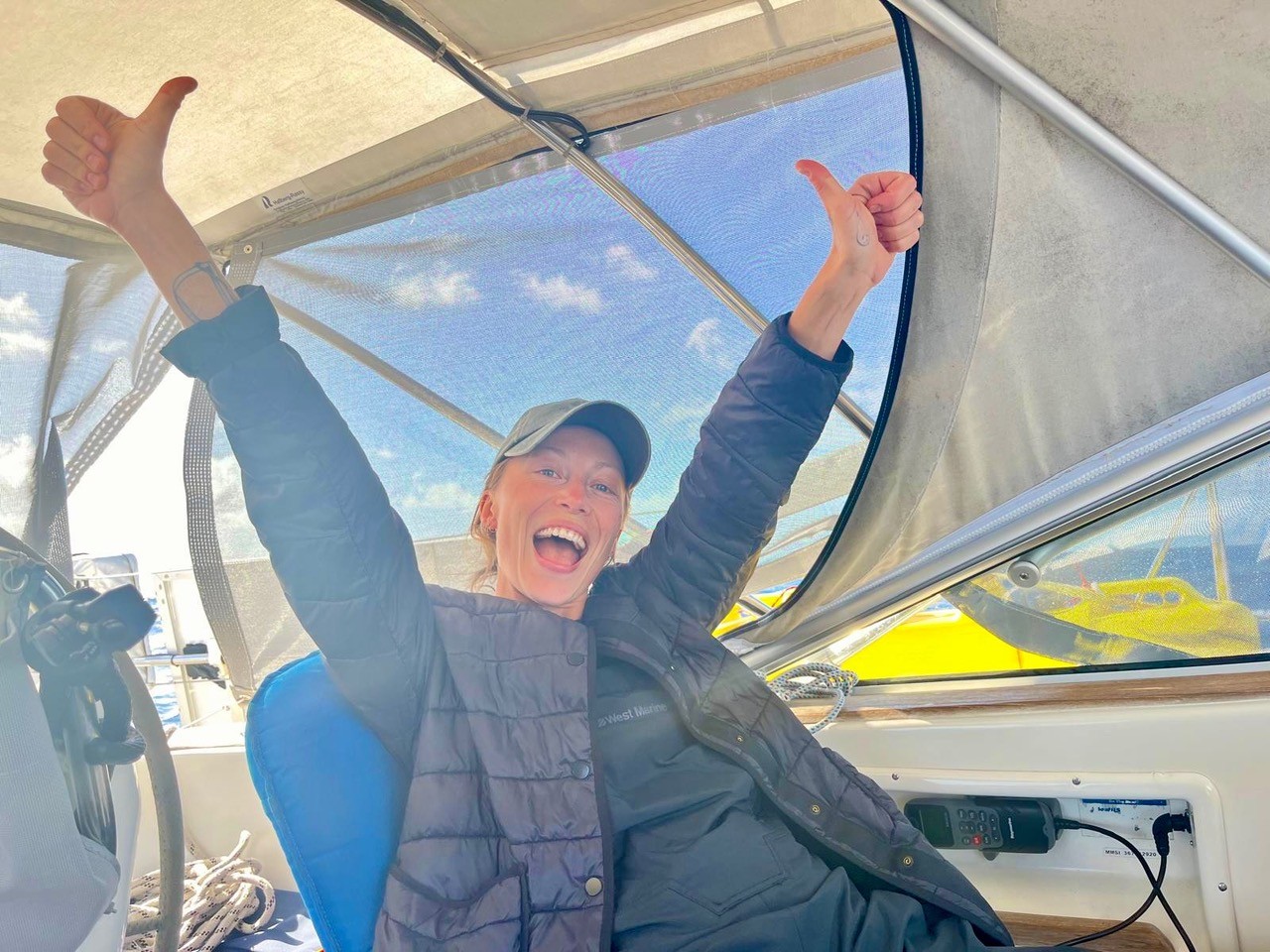
We hope you in turn might find a spark in the experiences of a couple of ordinary office workers, a high school student, and their band of friends who are now mates for life and who together decided to find out more about themselves, each other, and our world at a human pace and scale.
Postscript: you can check in on us at Instagram and Facebook at @windrush_horizons or on YouTube on @WindrushHorizons.